The Workshop

Exploring what’s becoming possible.

The world is changing. And so are the things we can build.

We’re living through an extraordinary period of technological change. Artificial intelligence, connected devices, advances in electronics and new ways of developing software are opening possibilities that would have seemed unrealistic just a few years ago.

At Tinkering Away, we’re interested in what these changes mean—not just for technology itself, but for the products we use, the businesses we build and the way we live.

The poodle mascot daydreaming at a desk with a laptop, a friendly little robot, a desk lamp, plants and a globe.
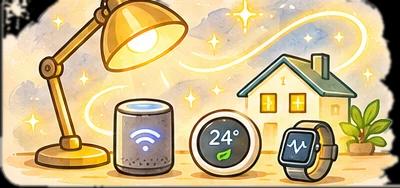
Everyday connected devices—a smart speaker, thermostat, smartwatch and lamp—glowing around a little house.

Giving products a brain

About a century ago, electricity transformed everyday products. It gave machines power, movement, light and entirely new capabilities.

Today, connecting products to the internet lets them communicate and work together, and artificial intelligence gives them something resembling a brain: the ability to understand, learn, adapt and respond. We’re moving toward a world where everyday objects appear to understand us, respond to our needs and sometimes act on their own.
The poodle mascot coding on a laptop labelled AI, with code and a flow diagram on a big monitor.

Changing how things are made

AI isn’t only changing the products themselves. It’s also changing how we develop them. Until very recently, creating sophisticated software was expensive and time-consuming. AI-assisted development is changing those economics dramatically.

Small teams can now tackle projects that were once much larger, build more capable and complex applications, and bring them to market faster and at a lower cost. This also changes business models—what’s practical to build, how products are priced and even which ideas are worth trying.

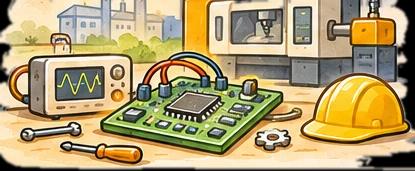
A circuit board, oscilloscope, tools and a hard hat in front of manufacturing machinery.

The physical world is a little more complicated

Hardware hasn’t become quite so easy. Developing a physical product means dealing with materials, components, electronics, mechanics, prototypes, molds, tooling, suppliers, production processes, quality control and logistics.

Connected products add another layer of complexity, bringing together multiple types of engineering. But that’s also where we see some of the most interesting opportunities. Through LeWorks, we’ve spent seven years developing IoT products, completing more than 20 product developments for customers around the world. That experience has given us a practical understanding of what it takes to turn an idea into something real.

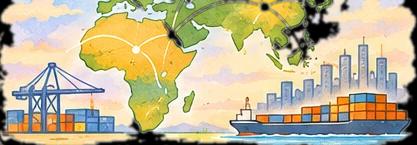
A map of Africa, Europe and Asia connected by trade routes, with a port crane, a container ship and a city skyline.

A changing world creates new opportunities

Technology is only part of the picture. The world’s economic landscape is also changing. Asia continues to play a central role in manufacturing and technological development, while growing economies across Africa are creating new markets, industries and opportunities.

Through LeWorks’ international activities, we have the opportunity to work across different markets and see some of these changes firsthand. When new technology, changing economics and emerging markets come together, they can create opportunities that didn’t previously exist.

The poodle mascot striding along with a backpack, ready for the next adventure.

So we keep tinkering.

We don’t have a single grand plan to transform the world, and we certainly don’t pretend to know exactly what comes next. We have ideas, experience, curiosity and access to technologies that are becoming more capable almost every day.

Some ideas become software. Others become physical products. Some are experiments that lead somewhere unexpected. We explore, build, test, learn and improve.

And then we tinker some more.